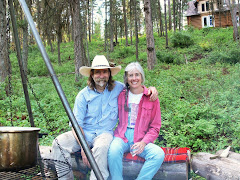
The Premise

One purpose of our Life at Beaver Lake blog is to act as a playground for our imaginations. Wendy and Bob have set up a weekly challenge for themselves. The rules are flexible (as all rules should be), but it began like this. Week one, Wendy writes a piece and Bob takes a photograph. Each chooses their own subject matter. Week two, Wendy and Bob respond to what the other created for week one. In other words, Wendy writes to a photograph Bob took; Bob takes photographs to accompany the piece Wendy wrote. The next week rotates back to free choice of topics. As readers, you probably will not be able to tell the difference between weeks---or maybe you will. Bob will likely post some writing as well, in the weeks to come.

_______________________________________________________________

Monday, April 5, 2010

Ode to Joy: a Multi-genre Reflection

“The opposite of play is not work; it’s depression.” Brian Sutton-Smith

Two of my friends turned 49 this week—a precursor to help me adjust my sails before I, too, reach that landmark later this year. One says she was just not born to ever be 50. It just doesn’t fit her mode of operating in the world. I wonder what 50 looks like in her mind. I’m interested in how people seem to form ideas about what life is like at a given age. Even my grandmother had them. As far back as I can remember, when it was a day where her bones ached or her body refused to cooperate with her mind she would say, “I feel like sixty!” She continued to use this expression well into her nineties.

My other recently birthday’d friend says turning fifty changes nothing. Sometimes my body disagrees. Things change, certainly—things we can’t control. But my friend’s point, I think, is that we do control what happens inside ourselves—we choose our own sense of balance as we play with the knobs that adjust our levels of fight or acceptance with regard to these inevitable changes. There is no right or wrong approach--the settings that bring optimum happiness will be different for each of us, according to our own individual joys and challenges.

I have been lucky. I am in the privileged position of being able to find the joy in my life. I can still run and play and laugh and love. I realize that this is not possible for everyone. Physical ailments exacerbated with age, loss of love, diseases like cancer or depression, so many life circumstances require a focus on mere survival rather than joy.

I grew up in a house where my father went around singing “Accent-tu-ate the positive; elim -in-ate the negative; latch on to the affirmative, and don’t mess with Mr. In-between.” The truth is, most of life is in-between. Some days are better than others. But the life circumstances Bob and I have built for ourselves, along with the occasional fear and sorrow, brings me a great deal of joy.

The other day, Bob said, “You know, I think this relationship of ours is relatively rare. After all these years, we can still make each other laugh.” It’s true. It’s an odd day where we don’t enjoy a belly laugh together. Those usually come during play times—walking with the dogs (and cats), dancing around the kitchen as we make dinner, laughing about some ridiculous circumstance of the day or something that one of my students said. Being with Bob brings me joy.

We have a network of friends, too, who still know how to play. My dad once noticed and found it remarkable that none of the couples in our closest circle of friends have children. I know in many ways having children around keeps you young. Ours would be grown by now anyway. The strange thing is that not having children also helps keep us young. In our minds, we are still the children. Our role has never switched to that of parent. We still know how to play. I smile at the thought of six of us, filling half a row in a movie theater a few years ago, waiting to see Toy Story. We kayak and have water fights. We build campfires and make s’mores and tell stories. Of course, we don’t do these things nearly often enough. We agree that our lives are ridiculously busy with the demands of work and trying to survive the high cost of living in the Flathead Valley. Each time we gather, we vow to see each other more often. We remind each other to play. Our friendships bring me joy.

I find joy in my early mornings of solitude. Each morning I am home, I make a pot of black tea strong enough to drink it “white”—the New Zealand way. I sit in a little rocking chair in a big, triangular window upstairs—looking out as the world as it awakens, giving thanks for a new day. My cat Moxie is often in my lap along with a book or my little computer. Mornings bring me joy.

Morning’s Pond

Aleutia, the younger
Of the two Samoyeds, and I
Are the only two
Awake—

Pressing our noses
Into the corners
Of the Day

While the rest
Of our small
Family
Dreams

Idaho, the athsmatic cat,
snores
Qanik, Aleutia’s older sister, chases yesterday’s rabbits,
toenails clicking on the wood floor in hot pursuit,
and a beloved man, having not yet smelled coffee,
Yawns through his stretch, rolls over, returns to slow, rhythmic breathing

Wrapped in the sounds
Of peace
Their presence
Reassures us,

Infuses us with a courage
That is not our own

As we dip our toes into the morning.

____________________________

No list of joys would be complete without mentioning our pets. Currently, two dirty white Samoyeds and two cats—one black and one orange—share our lives and sometimes our laps. These animals model joy. They are our teachers in play. Their presence in our lives reminds us to lighten up—to each day look forward to things we might take for granted and never should--our walks and our food—and to be grateful for every opportunity to run free in this amazing forest we call home.

Qanik and Aleutia run full tilt, when they want to, and stop instantly—their noses grabbed by a scent that yanks them around. Sometimes it sets them spinning in circles.

We find joy in watching our little cat, Moxie, running as fast as she can to keep up with us when we walk Moxie is a small cat with short legs. Yesterday, we didn’t even realize she had followed us until suddenly, far from the house, halfway through our normal route, there she was, running up behind us, panting. Bob laughed out loud--yelled out to me, “Guess who’s here?” At times when she’s completely worn out or we are walking through mud or water that would cover her legs, she consents to ride on my shoulder for a while. I hoist her up there like a bag of potatoes, so she can see the world behind my back. She’ll balance herself there—sometimes I don’t even have to hold onto her—and watch the world go by, backwards.

Sometimes the animals find joy in ways we wish they wouldn’t. Aleutia, for example, loves skunks. She also loves cats, and we think she probably doesn’t see much difference between the two. And she seems to particularly love that skunky smell. She chased one just last night. Her sister, Qanik, was not far behind— following close enough to protect Aleutia, but far enough away to never really get sprayed. Aleutia is always the one in the line of fire. And as she carries that smell our way, I can almost hear her say, “ahhhh… spring.”


Skunked

Charging down the hill
In response to my impatient third call
Comes Aleutia, the youngest Samoyed--
A white streak,
Eyes squinted,
Mask matted,
Yellow-green droplets
Dotting her head

She flies past--
Splashes into the lake
Odor arriving
Out of sync
Like a sonic boom
Or a worn out
Movie soundtrack.

Sprung from the water,
She lands on her back
In the bare dirt under the trees
Rolling, rolling
Tamarack needles sticking to
Wet white fur
Turning to mud.

Crazed,
She stands and shakes,
Bounces from dirt
To water
And back
Her typical post-bath
Behavior revisited

Relief
In her eyes
That this time,
At least
Her new aroma,
This hard-earned eu de skunk,
Befits a dog
Of the forest.


Aleutia sometimes also finds other non-living play toys. Sometimes she carries them from the outhouse. When she’s trying to inspire a partner to join in her play, she will grab something in her mouth and shake it hard, tempting her potential playmate to try and take it from her. We sometimes find the aftermath of this kind of play--toilet paper strung out over the yard, as if the households I blessed with such an honor in my teenage years had come to return the favor. Once we found the soft toilet seat, meant to make those winter morning visits just a little more comfortable, a little worse for wear, in the middle of the yard. Sometimes we find the shredded remains of catalogs and magazines.

Let’er Rip

Outhouse catalogs
never last long.
Aleutia,
Samoyed shopper,
rips out pages
one by one…
systematically
rejecting
their offers.


So whatever dreaded age is lined up, waiting for you, and whatever your current ability to find joy in the world, we hope these words and these photos are a way of sharing some of ours.


Sunday, March 28, 2010

Thin Ice

It is the season of thin ice
On Beaver Lake,
The time of year when I had just begun to believe
That this time around, the lake ice,
solid beneath our feet for months,
Must surely be impenetrable.
How can it possibly surprise me, year after year,
When it begins to melt—just at its edges,
Water lapping quietly at the shore for the first time in many months?

I am fascinated every time this thin edge of water reappears,
As if I had forgotten water had ever been there.
I crouch down, gaze into it,
Watch as shrimp dart
Under the edge of ice and back into the daylight again.
If I watch long enough, I can even trace the slow path of a stonefly larvae
As it drags its finely-masoned cocoon across the mud.

Most nights, the edge ice refreezes,
Re-covering what water was open yesterday afternoon
And will be again,
Hesitant to take that next, bold step
Into a new season.

Three osprey have been circling high above the lake, of late.
I thought I heard their shrill call a few weeks ago.
I caught my breath, not daring to hope.
Too early, I thought, eyeing the nest to which they return
Year after year,
But sure enough, here they are,
To reclaim old territory.

The thin ice on the edge of these mornings
Is not like the snow covered, solid surface of winter.
Light seems to emanate from objects below—
Colored pebbles, pieces of discarded boat covers,
Fishing lures,
Splashes of color missing for a season
Illuminate the delicate, feathery veneer
Just glazing the surface.
In this rare time, I hold two worlds in one view.


Three days ago I walked the still reliable
middle-of-the-lake ice.
Lost in thought, I was startled by a sound,
unheard for a season.
I looked up. Not far from where I stood,
A small piece of water had opened,
A transition zone of cattails and reeds between a small pond and the larger lake.
There, hidden in the dried remains of last year’s vegetation,
Stood two Canadian Geese,
Waiting.

Yesterday I returned to the geese’s claim,
And instead found a pair of mallards splashing there,
Content.
Soon, the lake will open
Negotiations will begin, decisions will be made
About how this place will be shared.
But for now, the early comers relax
Into these days of incremental change
Trusting in the cycles of the earth.

I am not always so trusting.
Impatiently, I try to peer around the next corner,
Attempt to interpret each small change as it occurs,
Believing I might choose where my next foot will fall.

In the cold season,
The ice forms layer by layer,
Capturing a record of each day.
Now it melts much the same way,
Each event of the past season
Slowly revealed:
Pieces of a doe’s tan and white fur scattered in a semi-circle,
Marking the place she was taken down.
Thousands of fishermen’s holes,
Each hidden, as it snowed,
from the next fisherman’s view,
Comic now in their pattern and number, covering
the lake’s surface.

The same is true of our footprints.
We have walked the lake all winter,
My husband, my dogs, and I,
And now our footprints are everywhere,
Covering the lake.

Examining them, I realize
I never know the destination or even the direction
Of the trail I make while I am walking.
It is only on these rare days of transition,
These days of thin ice
When I can step off the path,
Look back from a different vantage point
And trace the patterns created by my footprints.
Only then, do I realize
The true arch of experience
Which has carried me to this place.

Part Two of "the Easy Life", in which Dorris gets her oats....

First, a big “tank you” to everyone who commented on the story so far. I know the writing isn’t that great, but the story itself is just too good not to tell. If only it were too good to be true.

OK, part two of The Easy Life…

At the end of part one, having lived through a miniature first-person screening of the closing scene from “Butch Cassidy and the Sundance Kid”, I decide to work from the outside of the tank to get it to pop back into shape. First, I carefully build a very large and heavy beam across the top of the hole in which the tank sits. The new idea is to somehow attach a tow chain or big cable to the top of the tank, and use a several-ton hand-winch to pull the top of the tank up to the big beam I just built. To make sure I don’t just yank a hole in the top of the tank, I cut several two-foot diameter discs of heavy plywood, bolt them together, and use them as a backing inside the top of the tank. Then I borrow a large shackle from the axle of my truck, and bolt the shackle through the top of the tank and the plywood backing. I carefully crawl out to the center of the beam, and precariously balanced, begin to crank the winch handle and draw the tank back into shape. At first it pulls easily, and the tank begins to regain some of its original volume. Eventually, though, it stops cooperating. I have about four tons of pressure applied to the top of the tank, but instead of continuing to pop open, the entire tank begins to lift out of the hole. I let just enough pressure off the tank so it settles back to the bottom of the hole, then cautiously tap at the top of the tank with my foot while hanging off the beam. I would say that a sane person would venture no further, but actually, a sane person would never find themselves in this position in the first place. Of course, the cautious toe tapping doesn't yield results, eventually leading to a wholesale jump from the beam onto the top of the tank… and it works!! The tank actually pops back from a half-crushed five or six hundred gallon volume to its original thousand-gallon volume in just a split second. “I’m a $#&*@@$ genius”, I think to myself as I rise into the air along with the thousand pounds of rocks and dirt that was also occupying the particular five hundred gallons of the universe that the tank had no use for just a moment before.

I have developed a sort of standard response to situations where I find myself lying on the ground some distance from the place I last remember being…, and that is… I spit in my hand. Often, I’m still not sure if I’ve broken anything, or if I can even get up, but what I want to know right off the bat is… did I bust any teeth? I hate having teeth knocked out. One, its, ridiculously painful given the actual severity of the injury, and two, its’ gonna cost a lot of money. So before I even start to work up the nerve to move various body parts around, I wanna know if any teeth were involved. And whaddayaknow? No blood in my hand. No teeth. Its’ still a good day.

The next part of the job is to set a pump inside the tank. Prior to this, I had set up several various types of systems where the pumps were inside the cabin, and they must draw water from the tank, and push it through the pipes to the sink. That last sentence sounds a little didactic at the end, because this is devolving into a brief but boring lesson on pumps. Pumps like to push. Pumps hate to suck. If the pump is located above the water source, it must first suck that water up. It is orders of magnitude more efficient for a pump to reside below the level of the water it is pumping from. So, I decided to use a small pump that you would normally find in someone’s well, but instead, set it inside our water tank. This will give us much better pressure, and use less much less electricity. Yay. What this also means was that it will require a sizeable 120 volt AC inverter to convert our DC battery power to AC current for this type of pump. But not to worry, because I have done my homework, and have purchased a large inverter that is actually sized for the new pump. Sometimes, I’m amazing like that.

After setting the pump in the tank, and running the outlet pipe through the bottom of the tank, I hooked up the underwater electric lines to the pump. The wiring has its’ own set of openings, and everything comes up out of the ground and is hooked into the cabin’s massive plumbing and electric system (one sink, two lights, and two power outlets). I trot down to the lake, fire up the gasoline-powered firefighter’s water pump, and fill the new tank with a sense of pride, and anticipation of a long-overdue bath beckoning. I hoof it back up the hill and everything seems a “go”. After a couple of double checks of my wiring settings, set the shut-off triggers on the pressure switches, I make the inaugural throw of the switch. And… nothing happens. At all. Turn off the switch. Re-check all electric lines. Throw switch again. Start to get annoyed.

I make a list of possible problems in my mind. Number one keeps surfacing as; the inverter is not providing enough start-up juice. With most electric motors, there is a significant initial draw of electricity that can be ten times the actual rated amperage of the motor. And they never provide that info in advance. Solution: hook up two inverters! In a brilliant act of foresight, I have a spare identical inverter on hand, as out here I always try to have a back-up for the most critical components of daily life. I wire together the output so I have double the capacity to start the pump. Throw the switch again… and right there, in my kitchen, appear the Northern Lights, the Southern Lights, the Fourth of July, and New Year’s Eve firework displays, all at the same time. I could have sold tickets to the light show. Very pretty. And stinky. And a tad spendy.

Turns out, you don’t need to synchronize DC power inputs, but you must synchronize the AC outputs from the inverters if they are powering the same device. Sock that bit of advice away, along with “pumps like to push, not suck”, in case you are a post-apocalyptic survivor. Your new neighbors might decide to keep you around instead of having you for dinner. (OK, that’s a stretch, but I’m pretending like this is practical advice I’m disseminating in story guise). (And I can’t think of another feasible scenario in which said advice might serve as practical).

So, how now to test the pump for damage? Well, the lightest gauge wiring is to be found in, of course, the underwater connections. And where is the pump right now? Underwater. Perfect. Next step… rummage around till I find one of my wetsuits, booties, dive mask, and enough PVC to devise a make-shift five-foot long snorkel. I have an underwater headlamp (where the hell did I get that?), and a pair of wire cutters when I descend through the irritatingly-tight manhole into the full water tank. Kinda spooky, I have to confess. I have to fool around for a little while to tie myself to the bottom of the tank to resist the buoyancy of the wetsuit and my inhalations. Finally, I get situated and stay still long enough for the murky water to clear off so I can inspect the wiring. Sure enough, the shrouding over the underwater connections looks burned pretty good. I realize I will have to cut sections out of the wiring, and bring down the underwater soldering set-up (and where the hell did I get that?) to fix the connections. But first, I need to cut the wiring to see how much of it got fried. And that’s when things got strange….

A very, very unusual feeling swept over me, and the tank seemed to have a strange green glow, like those luminescent sticks you break open and play with on dark nights. The strange feeling intensified, "but that’s OK", I think, " a floating feeling is natural for someone floating in a water tank…", duh… but nonetheless, I start to get a little concerned, because I begin to think I’m not in the tank any longer, even though I can see my hands holding the wire cutters against the pump feed… ...and then I notice someone off to my right, in my peripheral vision… ...I turn to him, thinking maybe to ask for help, or at least an explanation of the current situation… …but he is bent over, in pain, laughing uncontrollably, sobbing the helpless tears of an adolescent male watching reruns of the Three Stooges… … and as I realize he is going to be of no help at all, the green light in the tank goes out, the wire cutters drop from my hand to the bottom of the tank, and I cut the anchor line from my waist and shoot to the surface of the water and out onto the frozen ground.

I normally resist the urge to imbibe when working with power equipment or electricity, but I decide that now would be a good time for a glass of single malt. As in “Very Fine Scotch Whiskey”. No ice, please. I peel off my very wet wetsuit, and slip into a glass of Lagavulan in front of the wood stove. As I am drying off and warming up, I think of the fellow off to my right in the tank. I start laughing too, thinking what a sight that would have been, and gleefully imagining who the hell my imaginary friend might have been.

But back to work, Lad. Now that I have successfully discharged the capacitors built into the pump... (!!!!! so that’s what happened... (note of interest; total capacitance for this pump; @~24,000 volts) !!!), ... at least it should be safe to re-enter the tank and solder new connections in place. This time, I wear a drysuit. It is warmer. It also turns out to be even harder to keep submerged than a wetsuit. But, “Bricks-in-His-Drawers” and/or “Perseverance” is my middle name, boys, and I solder the lines underwater without burning a hole in the most expensive suit I own. (I’m detailing all the little successes like that, so you don’t think I’m completely incompetent). (The success tally is now at... uh, "1"). And now for the bummer. That is the anti-climatic ending to this part of the story. Afterward, I hooked up the generator directly to the pump, and it *actually* worked. I pumped thirty gallons of water inside, heated it on the wood stove, and took a loooooooong hot bath. And put a serious dent in that bottle of Lagavulin. Just another week in paradise under my belt.

Post Script… the following year, I was assisting at a Blackfoot sundance in Heart Butte. One evening, midweek, I was telling this same story to some Blood friends, one of whom was the elder holy man for the Sundance ceremony. We were all laughing very hard at my follies, and after wiping away some tears, the elder, George Goodstriker, looked at me with an earnest but troubled grin, and said, ”That was Napi. Who you saw in the tank with you, that was the Creator. And I’m afraid you are going to live a very long life, because the creator loves to laugh, more than anything in the universe.”